By Rhodex
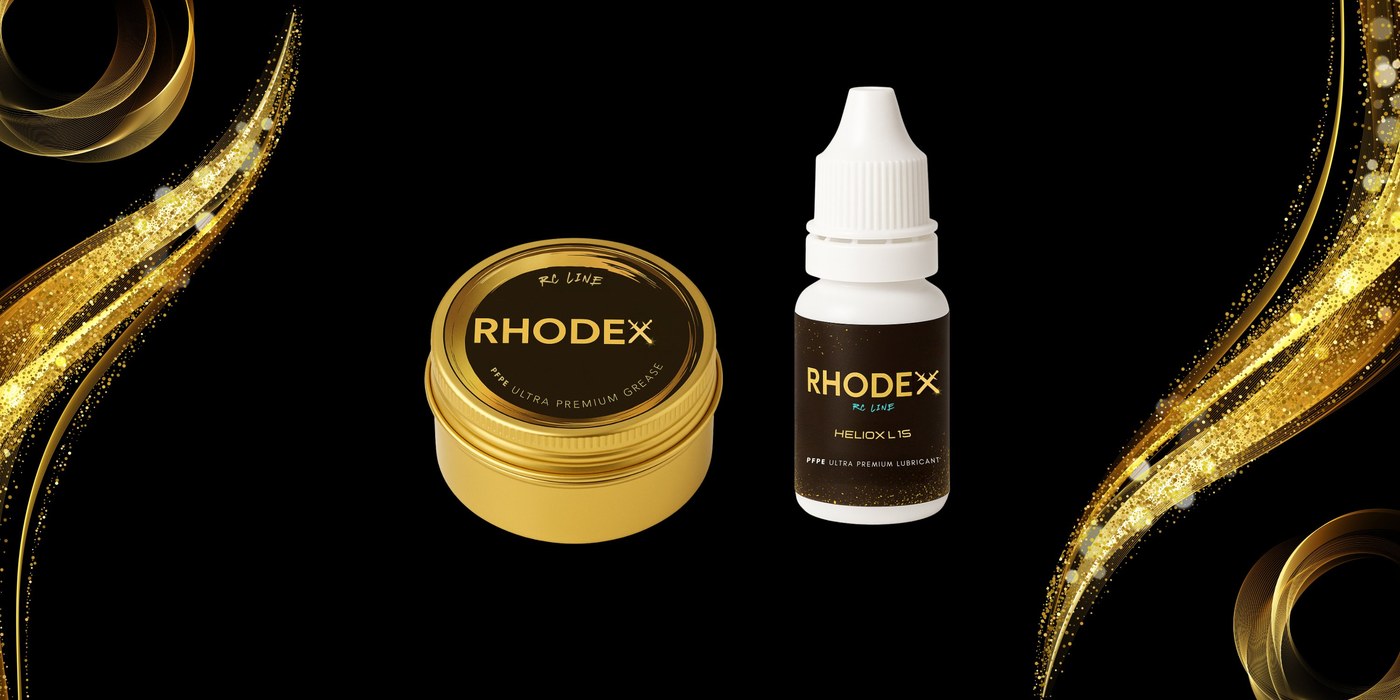
HELIOX
Aerospace-grade RC lubricants
PFPE chemistry for the hard parts of an RC build — ceramic bearings, severe-load drivetrains, and the corners where ordinary grease falls over.
PFPE chemistry for the hard parts of an RC build — ceramic bearings, severe-load drivetrains, and the corners where ordinary grease falls over.
PFPE — perfluoropolyether — was developed for jobs where conventional lubricants give up: jet engine bearings spinning at 30,000+ RPM, satellite mechanisms in vacuum, semiconductor fabs, chemical processing equipment. Places where you can't readily swap the lubricant.
It works because it doesn't oxidise, doesn't react chemically with anything, doesn't break down under heat, and holds its viscosity across a huge temperature range. Where mineral oils start to smoke and synthetic greases gum up, PFPE just keeps going.
Heliox is the same base chemistry, formulated and bottled for RC applications — high-RPM ceramic bearings, high-load drivetrains, and the kinds of components that punish ordinary grease. For everything else, the standard Rhodex range is the right answer; Heliox earns its premium on the parts that justify it.
The reasons aerospace uses PFPE — and the reasons it's worth using on the harder parts of an RC.
Doesn't react with metals, plastics, oxygen or fuels. What you applied last month is still that same compound today.
Functional from −70 °C to +250 °C. The kind of heat ceramic bearings generate is well inside the working range.
Conventional oils thicken and form deposits over time. PFPE doesn't oxidise at all, so the viscosity on day one is the viscosity on day three hundred.
PFPE adheres to metal surfaces at the molecular level. Under high pressure it stays put where conventional EP additives can get squeezed out of the contact zone.
It doesn't burn. Useful in high-RPM applications where atomised lubricant could otherwise be a fire risk — and a useful indicator that the molecule is structurally robust.
Doesn't break down, doesn't oxidise, doesn't wash out. Apply it once and re-lubrication intervals get much longer.
An oil, a grease, a dry film, and a kit that includes all three.

PFPE-based extreme-duty grease for the highest-load bearings and most demanding drivetrain applications. Aerospace-grade chemistry, RC-engineered viscosity.
Buy on Lubricants Hub →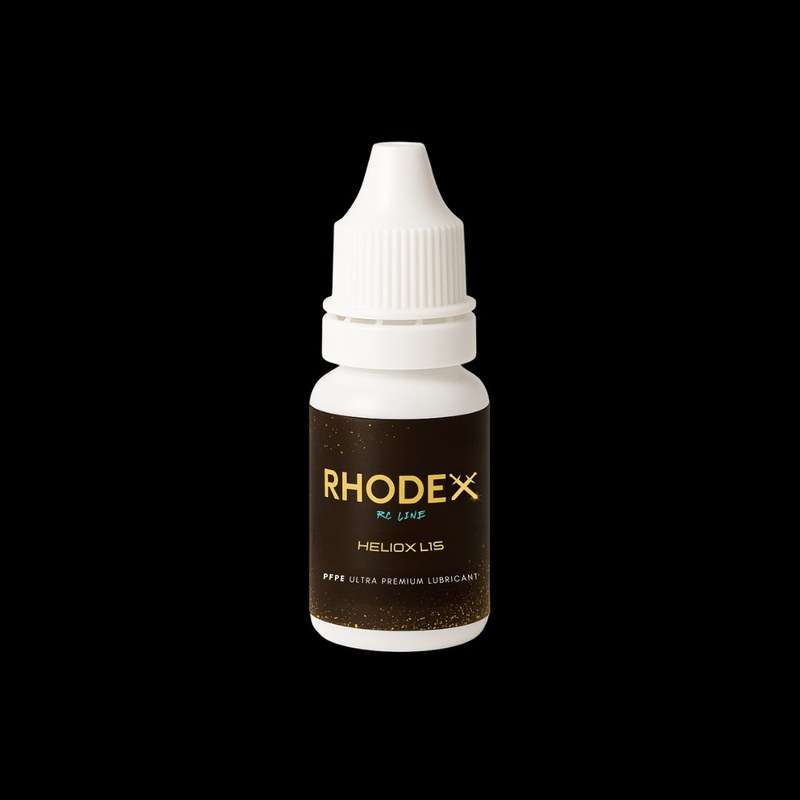
Pure PFPE base oil. Ultra-high-RPM bearing lubricant with chemical inertness and exceptional thermal stability for ceramic and steel race bearings.
Buy on Lubricants Hub →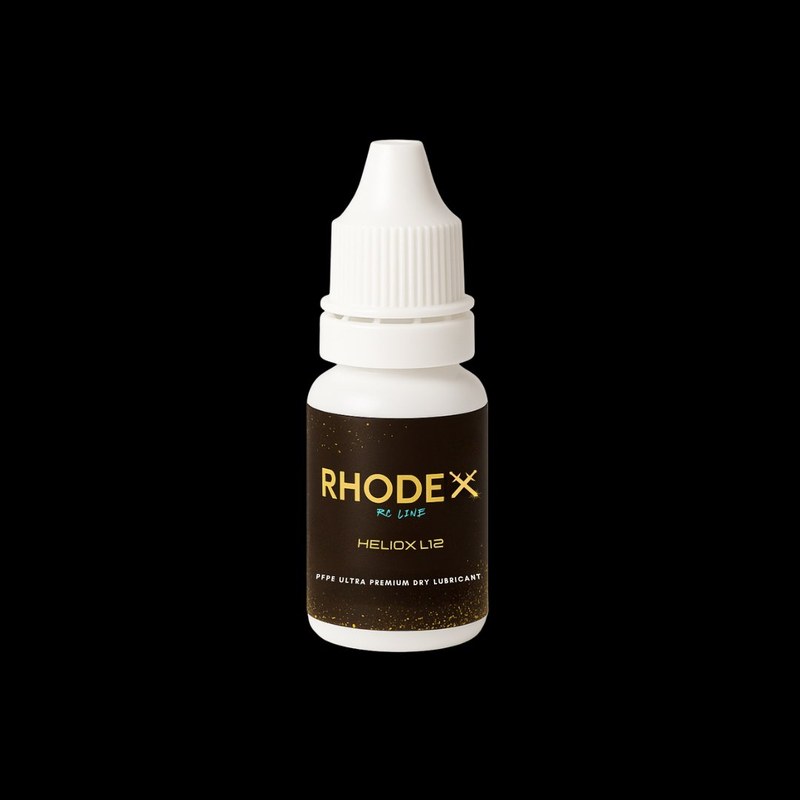
PFPE dry film lubricant. Perfect for sliding contacts, gears, and applications where wet lubricants would attract dust and debris. Apply, evaporate, protected.
Buy on Lubricants Hub →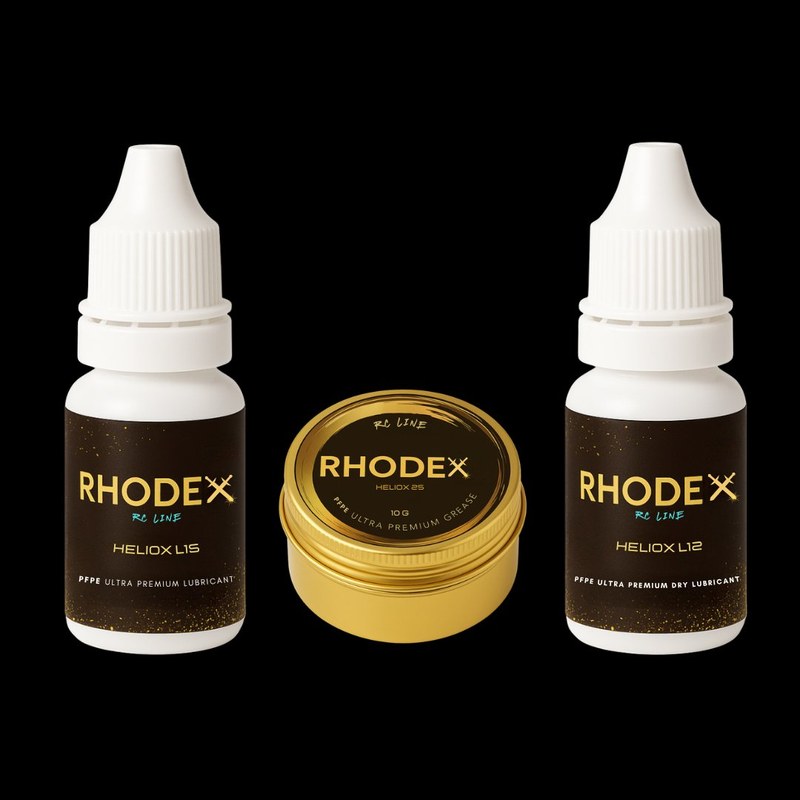
The complete Heliox aerospace lubrication system in one kit. Heliox 25 grease, L15 base oil, and L12 dry film — covering every drivetrain, bearing, and contact application.
Buy on Lubricants Hub →Heliox isn't an everyday grease — it earns its price on specific components. Here's the quick guide.
| Application | Recommended Heliox | Why |
|---|---|---|
| High-RPM ceramic bearings | Heliox L15 | Doesn't react with ceramic, doesn't oxidise under sustained heat |
| Severe-load drivetrain | Heliox 25 | Bonds to metal at the molecular level under high pressure |
| Sliding gear contacts | Heliox L12 | Dry film, so it doesn't attract dust or debris |
| High-speed steel bearings | Heliox L15 | Holds up at sustained high temperatures |
| Long-service components | Heliox 25 | Doesn't oxidise, so re-lubrication intervals get much longer |
| Full build coverage | Heliox Master Kit | The complete Heliox kit — covers most of the above |
PFPE base stocks are genuinely expensive — there's no cheap way to make fluorinated chemistry. That's why aerospace only uses them where the alternative is worse. Same logic applies here: Heliox is priced higher because it costs more to make, and it's worth using where the performance gap is real.
The four PFPE products, alongside the rest of the Rhodex range.